Русский

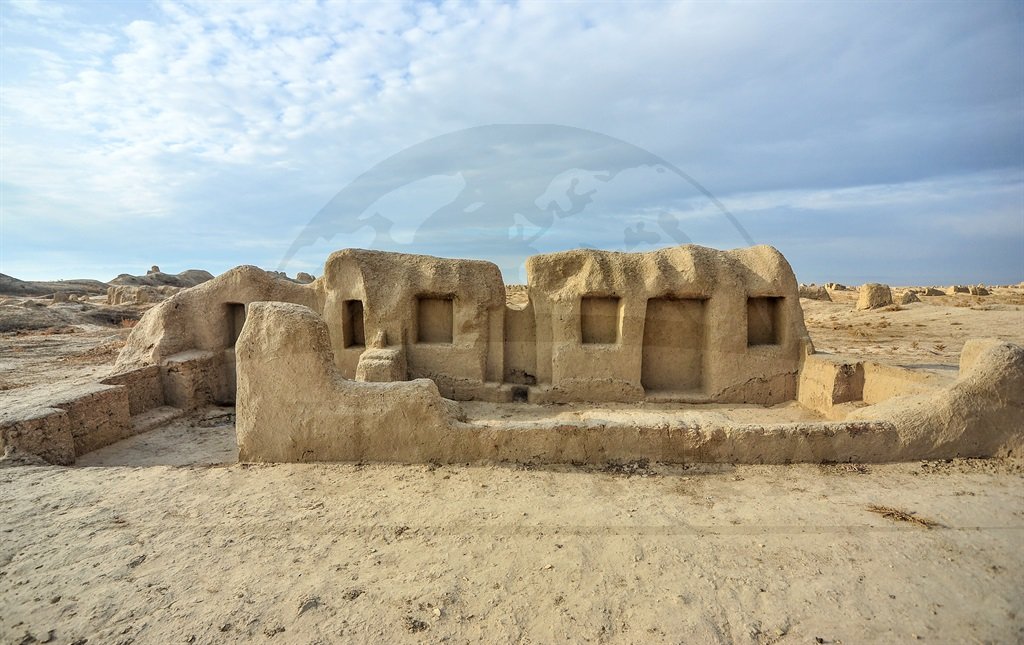
The ruins of Abiverd, now known as the Peshthag settlement, are located west of the etrap center of Kaahka. The settlement is a rectangular fortress covering an area of 10.5 hectares. The fortress is fortified with defensive towers. It contains the remains of a Muslim mosque built in the 12th century.
Abiverd was one of the significant cities in Northern Khorasan and is mentioned multiple times in written sources, especially since the Arab conquest. In the 11th century, during the struggle for control over Khorasan between the Seljuks and the Ghaznavids, Abiverd is mentioned several times by Abu Fazl Beyhak as a populated place where both Toghrulbek and Sultan Masud of the Ghaznavids stayed.
Ata-Malik Juvayni, a historian of the Mongol conquest of Central Asia, notes that Nisa was destroyed at one point. Most likely, after the Mongol rampage, Abiverd was not restored, as in the 11th century, Hamdullah Kaznevi writes that "Abiverd is a small city."
In 1947, one of the units of the YUTAKE visited Abiverd to conduct reconnaissance work, outlining the history of the city's development from the early Middle Ages to the 19th century. According to M.E. Masson's description, the early medieval Abiverd is a large dep (hill) to the northeast of the Peshthag ruins. Most of the surface material collected from the hill dates back to the 5th-6th centuries, although fragments of glazed pottery dating back to the 9th-10th centuries are also found here. Judging by the schematic plan, the city wall has an almost rectangular shape and covers an area of 42 hectares. The citadel is located in the middle of the northeastern wall of the city, occupying an area of almost 10.5 hectares.
Archaeological surveys have revealed the presence of a dense network of old abandoned canals and pottery pipes, which are direct evidence of past irrigation practices. In addition to water sources, there are large reservoirs (khaukhe) and wells in the city. The citadel is situated in the middle of the northeastern wall of the city and has a square plan measuring 300x350 meters. The gates of the citadel are located on the southwest facade. Its walls are made of a solid earthen rampart, with a width of up to 0.5 meters. The citadel is fortified with 20 towers. There is a moat surrounding the citadel, with a depth of up to 1.5 meters. In four places, the moat is interrupted by road embankments.